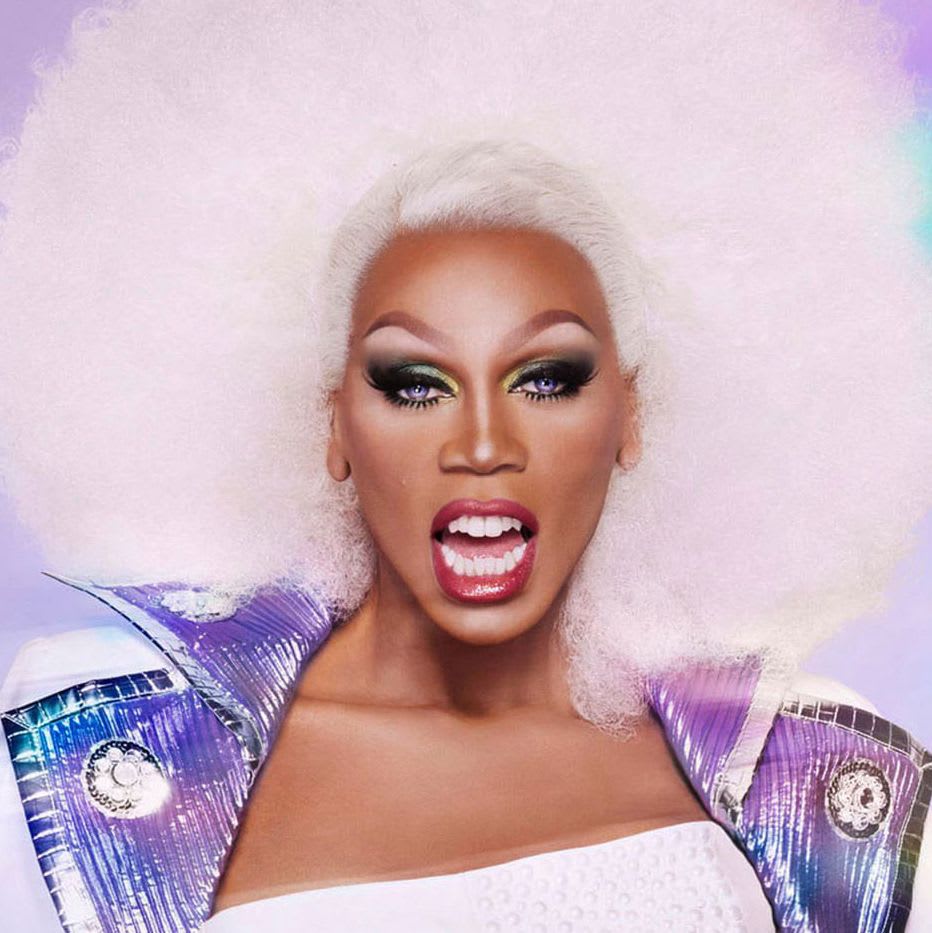
My conversation with RuPaul, whom I’m interviewing as his new television show, Viva la Diva, arrives in Israel (on yes stars real), got off to a strange start. When I called his office in New York I was met with a volley of shrieks and hysterical laughter, as if I had crashed a wild drag party.
I was already picturing RuPaul, the most famous drag queen in America and a working one for more than 25 years, sitting there with sequins on the receiver and a feather boa draped over the dial.
What’s going on over there?
“Nothing, we’re just relaxing, resting and looking fab-u-lous,” he says in his pampered drawl. “Actually, we’re laughing at the journalist who just interviewed me. I’ve been doing interviews for 300 years and I can tell you, some journalists shouldn’t be in the job. He asked whether I identify with the goals of some gay charity I’m performing for next week. Hell, what am I supposed to tell him? That I have no idea what the organization does? That they hire me, I show up, I perform, I leave, goodbye?
“Years ago I’d fake it, mumble something about how terribly important it is for gays to help gays. Now I just say ‘fuck that.’ I’d rather be real.”
Beach, Please
RuPaul, a machine gun of one-liners, can afford to trash journalists. Since RuPaul Andre Charles burst into view in the early nineties, the Queen, 48, has done it all: big shows, hosting series and specials, film roles, ad campaigns, albums (including the hit “Supermodel”) and a successful memoir.
Now, as mentioned, he is launching Viva la Diva here (RuPaul’s Drag Race, in the original), in which he presides over a pack of drag performers who want to be America’s next drag superstar. “For years people wanted me to do this show and I said no,” he says. “Nobody would promise me there’d be no nastiness. I would never laugh at contestants on a show. I respect the art of drag too much. This time the producers are friends of mine, and I knew the idea was safe with them.”
Still, your contestants are ridiculous at times, especially when they shriek that they’ve run out of makeup.
“There’s a thin line between laughing at someone and laughing with someone. A while ago I did a project with writers I wasn’t used to. They tried to write me jokes, and I had to tell them: sweethearts, I’m juicy, but I’m not a bitch. People don’t get the difference.”
What’s juicy about the show?
“I’m proud that we managed to make a show that presents drag as an amazing art form. The show says that our body is a temporary thing. You are not a man, or a woman, or black or white. You are not your religion, or your car, or your hair. You’re born naked, and the rest is drag. That’s why this art has survived through the generations. Drag reminds people that there are no rules, that we decide everything, that you can bend reality and have fun. That’s why cultures resist it: people don’t want to wake up from their dream.”
Throughout the show you use feminine terms for the contestants. Why?
“Come on, it’s the 21st century. It’s so meaningless. I call the contestants ‘girls’ because I respect them. Besides, you have to laugh. Life is for enjoying.”
The comparison to Tyra Banks’s show, America’s Next Top Model, is unavoidable.
“You can compare them. It’s a reality show, with girls competing to stay or go. But that’s it. The only resemblance is the humor and the synthetic hair.”
And the nails.
“We had little spats, but no crazy bitch fights. Watching someone create something out of nothing, that’s the drama. The real challenge is watching these creative entertainers make something together. In that sense we’re closer to Project Runway, because the drama is in the making, not in fighting over who took whose mascara.”
For all that he treats the contestants as women, RuPaul himself appears in some episodes as a man. “I have to, otherwise it undermines my authority as the expert. You need to see where I start from and how far I can take it. I want the winner to be like me, in the sense of representing this art. To make music and television, films, books, all of it. In short, the next drag superstar has to be a spokesperson for everyone who thinks differently.”
Lashes to Ashes
The show, which airs in the United States on the gay network Logo, is considered a big hit. It was recently renewed there for a second season, and RuPaul is very proud of that. “We’re casting right now,” he says excitedly. “Want to come? Do you have lipstick?”
I can buy some.
“Great. You have my word: if you come to New York, you’re on the show.”
Thank you very much. What else are you doing, besides filming?
“I’m on tour, promoting my latest album, Champion, which was inspired by the show, and I’m also writing a book for women with all the drag secrets real women need to know. It’s aimed at women who want to maximize their femininity.”
Go on, give them a tip.
“Here’s one on the house. There’s a drag queen’s way of putting on false lashes. They’re hard to put on in one piece. People put them on and end up looking cross-eyed. That’s why a lot of women avoid them. What you do is cut the lashes into four pieces, put glue on them, and then lay them on your real lashes with tweezers. That’s how you get lashes that look real.”
Lovely. Tell me, are you single?
“Are you proposing? Kidding. I’m a big believer in love. Everyone I’ve ever had a relationship with, I’m still in a relationship with. But no, right now there’s nobody. Everybody’s in a relationship with me,” he laughs.
By the way, you were in Israel in 2003. Do you think the drag queens here stand a chance of winning your show?
“Totally. It’s a funny story. I came to Tel Aviv for the Pride events, and I was originally supposed to stay one weekend. Naturally the airline lost my luggage, and that turned out well, because in the end I stayed ten days.
“I took trips to Jerusalem and the Dead Sea. I wasn’t prepared for such a spiritual, moving experience. The funniest thing that happened to me there was some girl recognizing me on the street, inviting me up to her apartment, and I went. There were loads of people sitting there smoking marijuana. It was a hysterical evening. Honestly, I didn’t meet many queens over there. I met Dana International, but she’s not a queen, she’s transsexual. I’m sure you have worthy candidates. All you need to be a queen is imagination, a love of beauty and a knowledge of pop culture. I’m sure there are Israeli kids with those qualities.”