
BuzzFeed crowned it “the most perfect show for our times.” Vanity Fair picked it as the most significant fashion event on television. The Daily Mail reported that on Halloween a huge number of revelers dressed as its characters, making it the year’s leading costume. And if all that weren’t enough, it broke a record in the history of the British BAFTA awards when it recently picked up 14 nominations, in nearly every major category.
Killing Eve is the name, and if you don’t know it, you are not party to “one of the great cultural events of the year,” as the press has called it. BBC America’s thriller-comedy-action-lust series appeared in 90 percent of the year-end rankings of the world’s 127 leading television critics, usually in the top three, ahead of celebrated shows like Atlanta and The Americans.
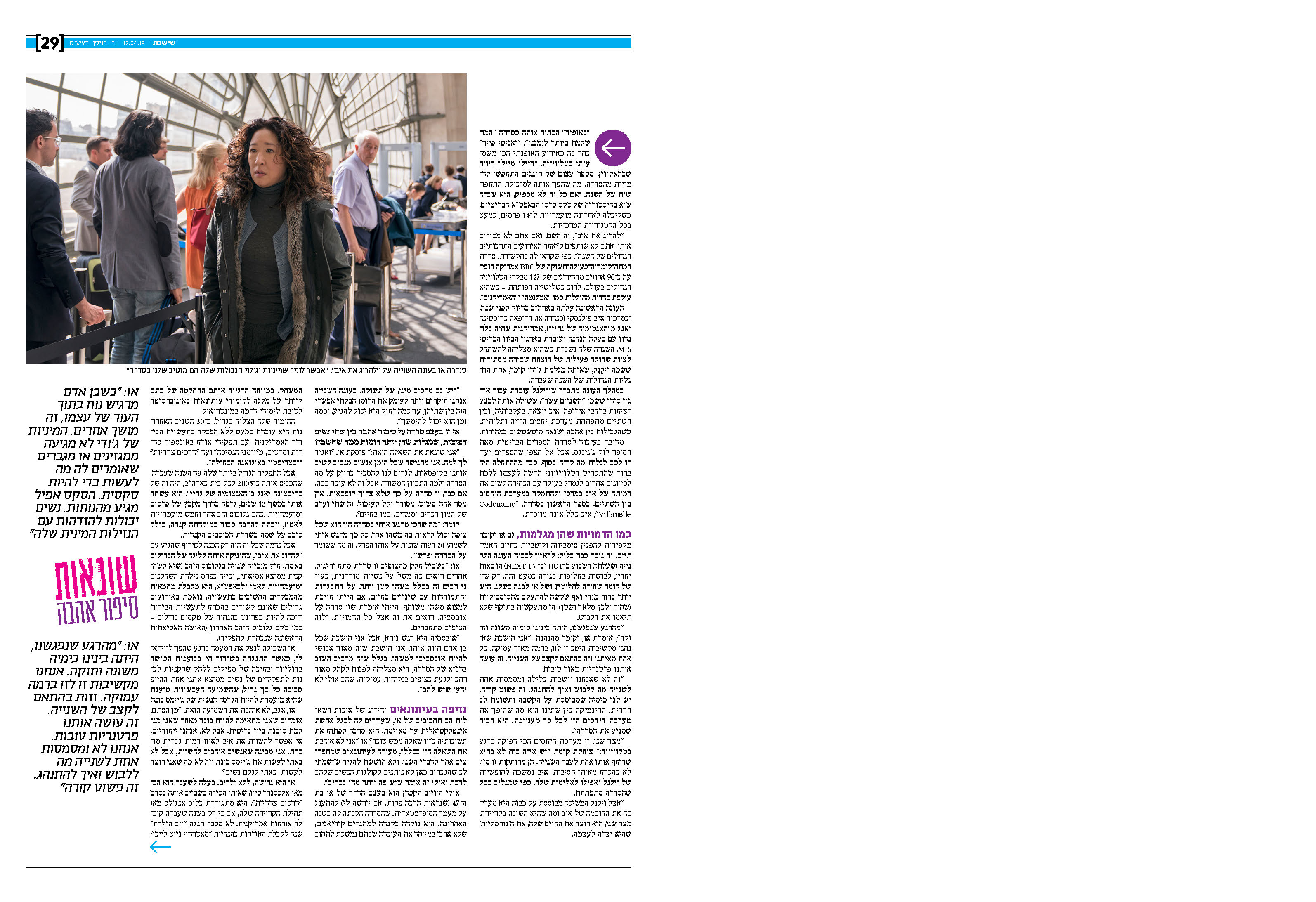
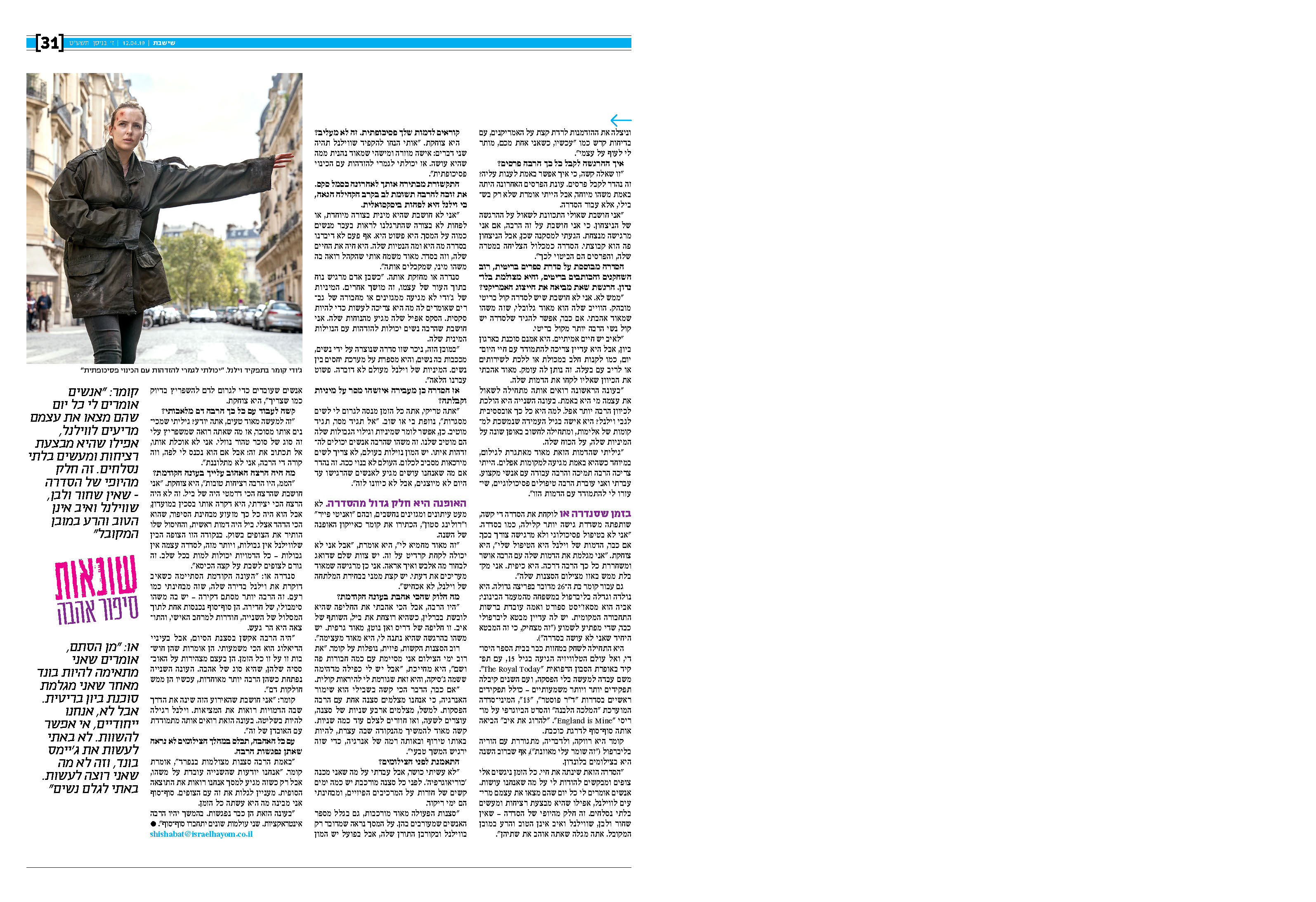
The first season premiered in the United States exactly a year ago. At its center is Eve Polastri (Sandra Oh, Dr. Cristina Yang from Grey’s Anatomy), an American living in London with her milquetoast husband and working for MI6, the British intelligence service. Her routine breaks when she manages to squeeze onto the team investigating a mysterious hired assassin named Villanelle, played by Jodie Comer, one of last year’s great discoveries.
Over the course of the season it emerges that Villanelle works for a secret organization called The Twelve, which sends her on killings across Europe. Eve goes after her, and between the two women a delirious, codependent relationship develops, with the line between love and hate blurring fast.
The show is adapted from the British book series by Luke Jennings, but don’t expect the books to help you find out how it ends. It was clear from the start that the television script allowed itself to go in entirely different directions, above all by putting Eve at the center and focusing on the relationship between the two. In the first book in the series, Codename Villanelle, Eve isn’t mentioned at all.
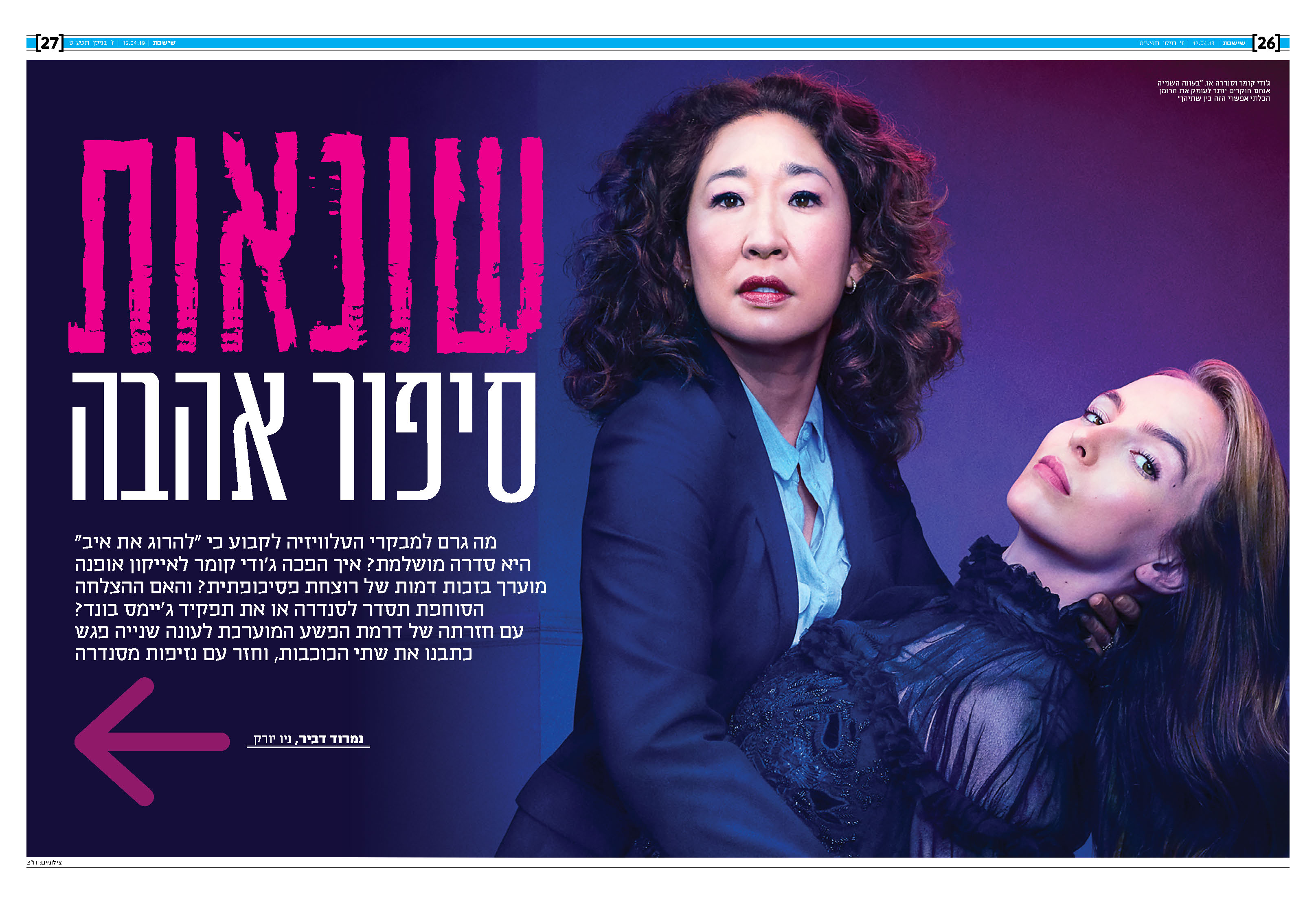
Like the characters they play, Oh and Comer make a point of displaying symbiosis and polarity in real life too. You can see it in the look: for the interview marking the second season (which premiered this week on HOT and Next TV) they arrive together, dressed in suits of nearly identical cut, except that Comer’s is entirely black and Oh’s is snow white. Could it be any clearer? And although the symbolism is hard to ignore (black and white, angel and devil), they insist flatly that they did not coordinate.
“From the moment we met there was a strange, strong chemistry between us,” Oh says, and Comer nods. “I think we listen to each other very closely, on a very deep level. Each of us moves to the other’s rhythm. It makes us very good partners.
“It’s not that we sit up at night texting each other about what to wear and how to behave. It just happens. We have a chemistry built on listening and mutual attention. The dynamic between the two of us is what makes this relationship so interesting. It’s the engine of the show.”
“Then again, it’s the most messed-up relationship on television right now!” Comer laughs. “There’s some unhealthy force pushing them toward each other. They’re fascinated by each other, not necessarily for the same reasons. Eve is drawn to Villanelle’s freedom and even to her violence, as you discover as the series develops.
“With Villanelle the attraction is based on respect. She values Eve’s intelligence and what she’s achieved in her career. On the other hand, she wants her life, the ‘normality’ she’s built for herself.
“And there’s a sexual component too, of desire. In the second season we dig deeper into this impossible romance between the two of them, how far it can go, and how long it can last.”
So it’s really a show about a love story between two opposite women who discover they’re more alike than they thought?
“I hate that question!” Oh rules, “and I’ll tell you why. I feel like people are constantly trying to put us in boxes, to make us explain exactly what the show is about and what the poet meant. But it doesn’t work that way. If anything, this is a show about not needing boxes. There’s no single, simple, tidy, easily digested message. It’s a weave of a great many things and dimensions, like life.”
Comer: “What excites me most about this show is that every viewer can see something different in it. It’s so exciting to hear 20 different opinions about the same episode. That’s what keeps the show fresh.”
Oh: “For some viewers it’s a spy thriller, others see it as a parable of modern womanhood, and for many it’s something smaller altogether, about growing up and dealing with change in your life. If I had to find a common thread, I’d say it’s a show about obsession. You see it in every character, and that’s what viewers connect to.
“Obsession is a terrible emotion, but I think every human being experiences it. I think it’s very human to be obsessed with something. Because it’s such an important part of the show’s DNA, the show manages to speak to a very wide audience and touch viewers in deep places they maybe didn’t know they had.”
Scolding journalists and grading the quality of their questions are hobbies of Oh’s, and they help her cultivate an intellectual, bordering on intimidating, air. She likes to open her answers with “That’s a really good question” or “I don’t like that question at all,” she reprimands journalists who interrupt one another, and she isn’t afraid to say that “I’ve noticed the men here aren’t letting their female colleagues speak, and maybe that means there are too many men in the room.”
Perhaps the strict vibe is simply the way Oh, 47 (and looking a good deal younger, if I may), savors the superstar status the show has brought her over the past year. She was born in Canada to Korean immigrants who were not especially pleased that their daughter was drawn to acting. What particularly annoyed them was her decision to give up a university scholarship in journalism for drama school in Montreal.
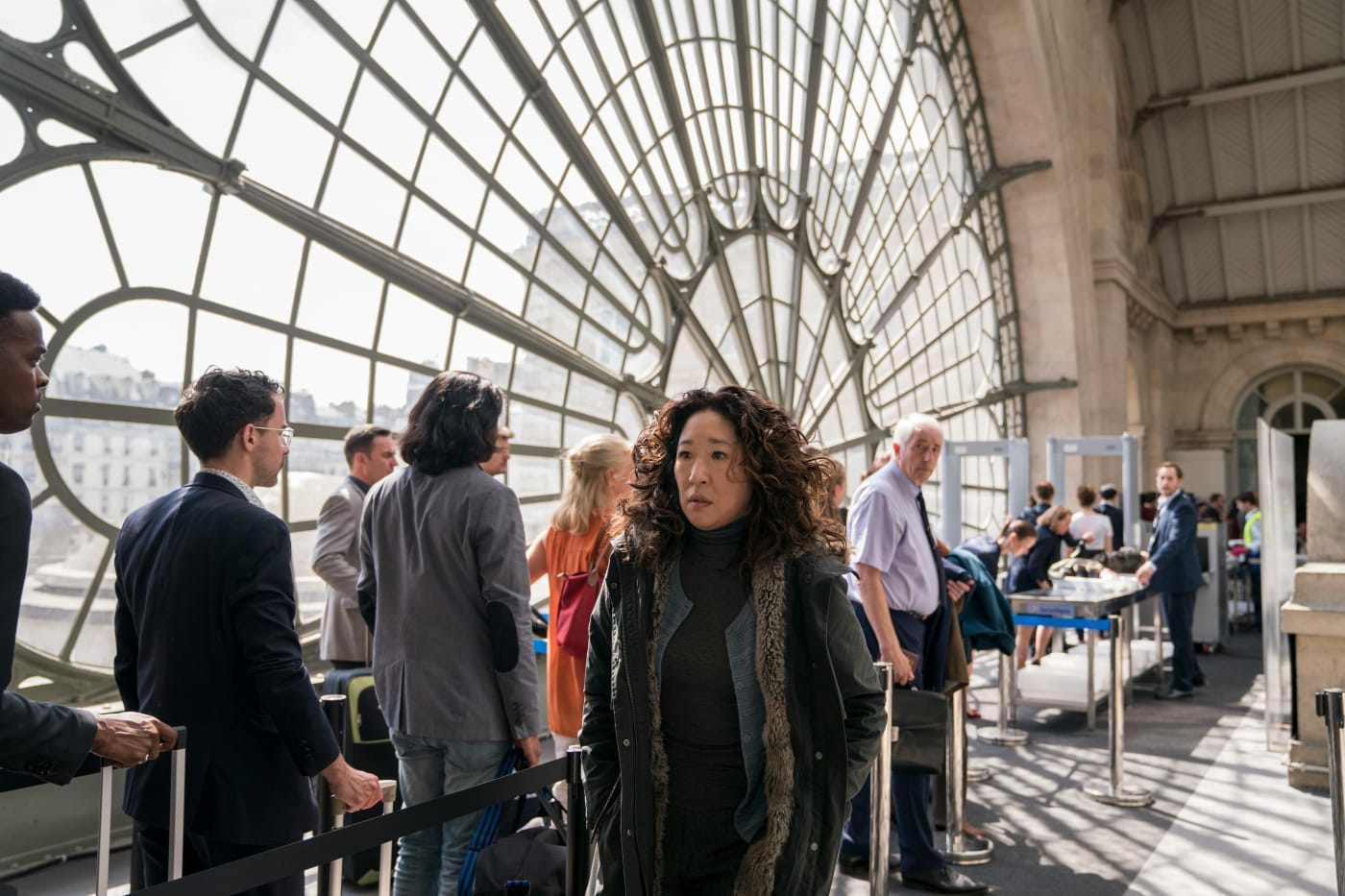
Her gamble paid off in a big way. For the past 30 years she has worked almost without pause in the American entertainment industry, with guest roles in countless series and films, from The Princess Diaries to Sideways and Dancing at the Blue Iguana.
But her biggest role until last year, the one that put her in every American home in 2005, was Cristina Yang on Grey’s Anatomy. She played it for 12 years, collected a cluster of awards and nominations along the way (one Golden Globe and five Emmy nominations among them), and earned a great deal of respect in her native Canada, including a star in her name on Canada’s Walk of Fame.
But all that seems to have been a warm-up for the madness that came with Killing Eve (already renewed this week for a third season), which launched Oh into the league of the truly big. Apart from a second Golden Globe (a record for an actress of Asian descent), a Screen Actors Guild award and Emmy and BAFTA nominations, she gets compliments from the industry’s most important critics, speaks at major events unconnected to show business, and lands front-and-center hosting jobs at big ceremonies, like the most recent Golden Globes (the first Asian woman chosen for the role).
Oh was smart enough to use the platform the moment it went viral, taking live-on-air swings at the racism rampant in Hollywood and at producers’ fondness for casting white actresses as women of other ethnic backgrounds. The hype around her is so great that the current rumor has her in line to become the female James Bond.
Oh, by the way, does not like that rumor. “Obviously, people say I’d suit Bond because I play a British intelligence agent. But no, we’re unique. You can’t compare Eve to some familiar male character. I understand that people like to compare, but I didn’t come here to do James Bond, and that’s not what I want to do. I came to play women.”
Oh is divorced, with no children. Her ex-husband is the director Alexander Payne, whom she met when he directed her in Sideways. She has lived in Los Angeles since the start of her career, though she only became an American citizen last year. Not long ago she celebrated the first “birthday” of her citizenship by hosting Saturday Night Live, and used the occasion to needle the Americans a little, with groaners like “Now that I’m one of you, I’m allowed to be full of myself.”
How does it feel to win so many awards?
“That’s a hard question, because how can you really answer it? It’s wonderful to get awards. The last awards season really was something special, but I’d say not only for me, for the show.
“I think maybe you meant to ask about the feeling of winning. Because I think about that a lot, whether I feel like a winner. I’ve come to the conclusion that yes, but the win here belongs to the group. The show as a whole succeeded in its goal, and the awards are the expression of that.”
The show is based on a British book series, most of the cast and writers are British, and it’s shot in London. Did you feel you were bringing the American representation?
“Not at all. I don’t think the show has a distinctly British voice. Its vibe is very global, which is something I loved. If anything, you could say the show has a female voice far more than a British one.
“Eve has a real life. She may be an agent in an intelligence organization, but she still has to deal with everyday life, buying milk at the corner shop or going to the bathroom or fighting with her husband. That gives her depth. I loved the direction they took her character.
“In the first season you see her start to ask herself who she really is. In the second season she goes somewhere much darker. Why is she so obsessed with Villanelle? She’s a middle-aged woman drawn to places of violence, and she starts to think differently about her sexuality, about her power.
“I found this character very challenging to play, especially when she really goes to dark places. I needed a lot of support and a lot of work with professionals. I’ve been through, and I’m still going through, a lot of therapy to help me cope with this character.”
While Sandra Oh takes the show rather hard, her partner radiates a lighter attitude, as she does on screen. “I’m not in therapy and I don’t feel the need for it. If anything, Villanelle is my therapy,” she laughs. “I play her with a lot of joy and I release so much through her. She’s fun. I get a real buzz from shooting her scenes.”
For Comer, 26, this is a big breakthrough too. She was born and raised in Liverpool in a middle-class family; her father is a sports massage therapist and her mother works for the local transport authority. She still has a heavy Liverpool accent, which is rather surprising to hear (“It’s funny, because it’s the one accent I don’t do on the show”).
She started acting in plays back in primary school and arrived in television at 15, with a part in the medical soap The Royal Today. From there she worked practically nonstop, and over the years landed increasingly substantial roles, including leads in Doctor Foster and Thirteen, the acclaimed miniseries The White Queen and the Morrissey biopic England Is Mine. Killing Eve finally made her a star.
Comer is single and, she says, lives with her parents in Liverpool (“It keeps me balanced”), even though she spends most of the year shooting in London.
“This show changed my life. Viewers come up to me all the time wanting to thank me for what we do. People tell me every day that they found themselves cheering for Villanelle, even though she commits murders and unforgivable acts. That’s part of the beauty of the show: that there’s no black and white, that Villanelle and Eve aren’t good and evil in the usual sense. You find that you love them both.”
Your character gets called a psychopath. Isn’t that insulting?
She laughs. “I was told to make sure Villanelle was two things: a strange woman, and someone who really enjoys what she does. So I could completely identify with the label psychopath.”
The press has recently been crowning you a sex symbol. You get a lot of attention from the gay community, because Villanelle is at least bisexual.
“I don’t think she’s especially sexual, or at least not in the way we’ve been used to seeing from women like her on screen. She’s just herself. We never discussed on the show what she is or what her orientation is. She lives her life, and that’s fine. It makes me very happy that the audience sees something sexual in her, that they accept her.”
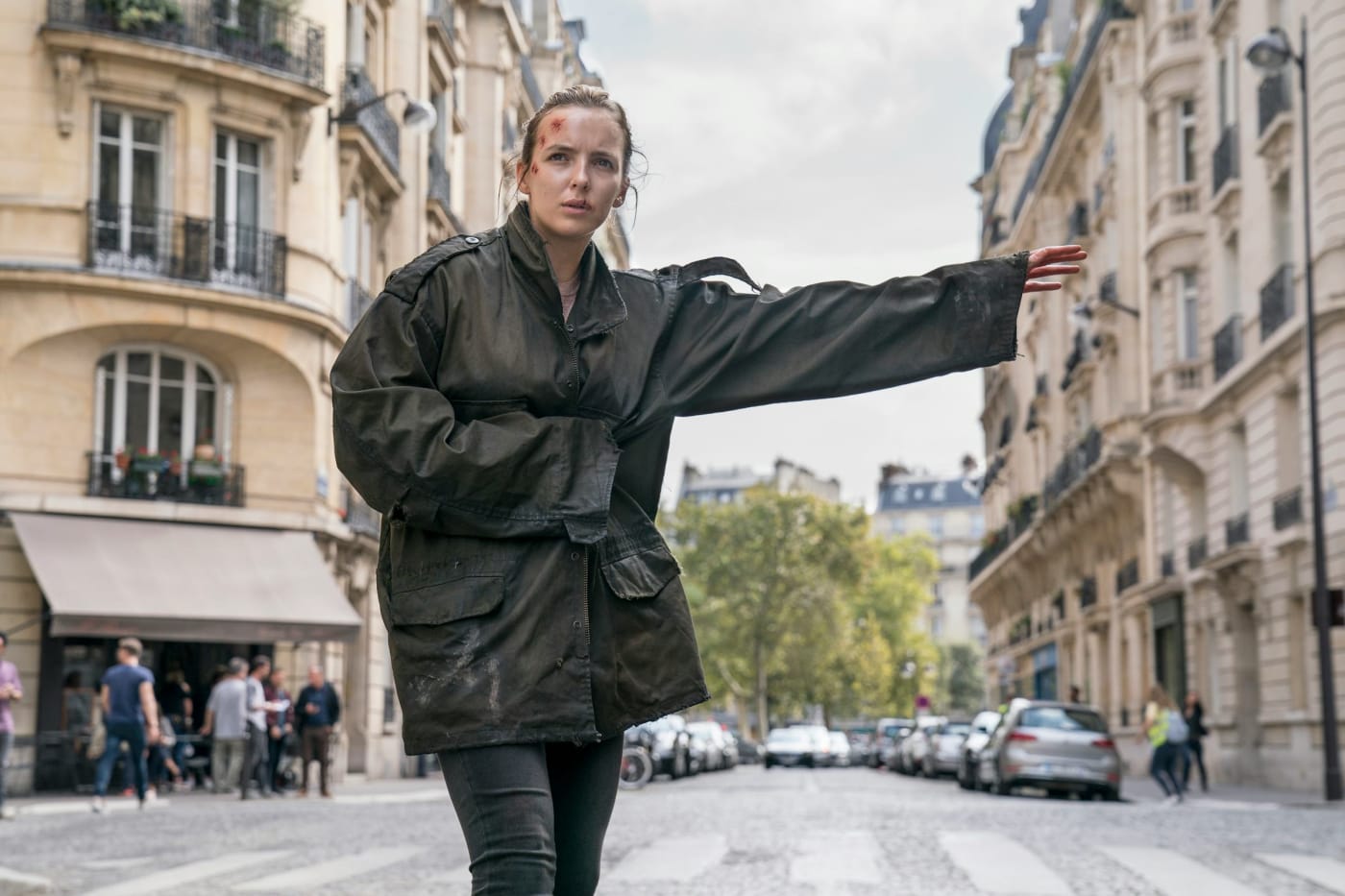
Sandra Oh backs her up. “When a person feels comfortable in their own skin, it attracts others. Jodie’s sexuality doesn’t come from magazines or from a bunch of men telling her what she has to do to be sexy. Her sex appeal comes from her ease. I think a lot of women can identify with her sexual fluidity.
“In that sense, you can tell this is a show created by women, starring women, about a relationship between women. Villanelle’s sexuality was never discussed. We just moved on.”
So the show does carry some message about sexuality and accepting it?
“You’re tricky. You keep trying to make me put frames around things,” Oh scolds me again. “Don’t say message, say motif. Yes, you could say that sexuality and exploring its limits are a motif of ours. It’s something a lot of people can identify with. There’s a great deal of fluidity in the world. You don’t need to put quotation marks around anything. The world isn’t built that way. It’s wonderful if what we do reaches people who have felt unrepresented until now, but we didn’t aim for it.”
Fashion is a big part of the show. More than a few respected papers and magazines, Vanity Fair and Rolling Stone among them, have crowned Comer the fashion icon of the year.
“It’s very flattering,” she says, “but I can’t take credit for it. There’s a whole team that takes care of choosing what I wear and how I look. I do feel my opinion is highly valued. There’s a bit of me in Villanelle’s wardrobe choices, I won’t deny it.”
Which look did you love most last season?
“There were many, but my favorite was the suit she wears in Berlin, when she murders Bill, Eve’s partner. It’s a Dries Van Noten suit, very graphic. There’s something about the feeling it gave me. It’s very empowering.”
Most of the physically hard scenes fall to Comer. “I finish most shooting days with a few bruises here and there,” she smiles, “but I have an amazing stunt double named Jessica, and she’s the one who makes me look cool.
“If anything, the hardest thing for me is keeping the energy up, because we shoot a single scene with a lot of breaks. For instance, we shoot four seconds of a scene, stop for an hour, then come back and shoot a few more seconds. It’s very hard to pick up from where you stopped, to be in the same frenzy and at the same level of energy, so it feels like a natural continuation.”
Did you train before shooting?
“I didn’t work out, but I worked on what I call ‘choreography.’ Before every complex scene there are a few hard days of rehearsing the physical components, and to me they’re dance days.
“The action scenes are very complex, partly because of the number of people involved. On screen it looks like it’s just Villanelle and her victim of the week, but in practice there are loads of people working to make the blood spurt exactly the way it should,” she laughs.
Is it hard to work with so much fake blood?
“It’s actually very tasty, you know? I found out they make it from sugar, so what you see spurting all over me is a kind of pure liquid sugar. I don’t eat it, don’t write that! But if it gets in my mouth, and that happens quite a lot, I’m not complaining.”
What was your favorite murder last season?
“Hmm, there were a lot of good murders,” she laughs. “I think the most dramatic was Bill’s. It wasn’t the most creative murder, she stabbed him with a knife in a club, but it was so shocking in terms of the story that it resonated with me most. Bill was a main character, and killing him off left viewers in shock. At that point the viewer understood that Villanelle has no limits, and more than that, that the show itself has no limits: every character can die at any stage. It keeps the audience on the edge of their seats.”
Sandra Oh: “Last season ended with Eve stabbing Villanelle in her apartment, which to me is like a thunderclap. It’s much more than just a stabbing. There’s something symbolic in it, of penetration. They finally enter each other’s orbit, invade each other’s personal space, and the result is a volcano.
“There was a lot of action in the final scene, but to me the dialogue is the most meaningful part. They say they think about each other all the time. They’re basically declaring their obsession, which is a kind of love. The second season opens with them much more united. Now they’re literally sharing blood.”
Comer: “I think that event changed the way the characters see reality. Villanelle is used to being in control. This season you see her dealing with the loss of that.”
With all the love, honestly, during the shoot it doesn’t look as if you two meet very much.
“A lot of scenes really are shot separately,” Comer says. “We know the other one is working on something, but only when it reaches the screen do we see the final result. It’s interesting to discover it along with the viewers. I finally understand what she was doing the whole time.
“This season they do meet. Later on there will be a lot of interaction. Two different worlds will finally connect.”