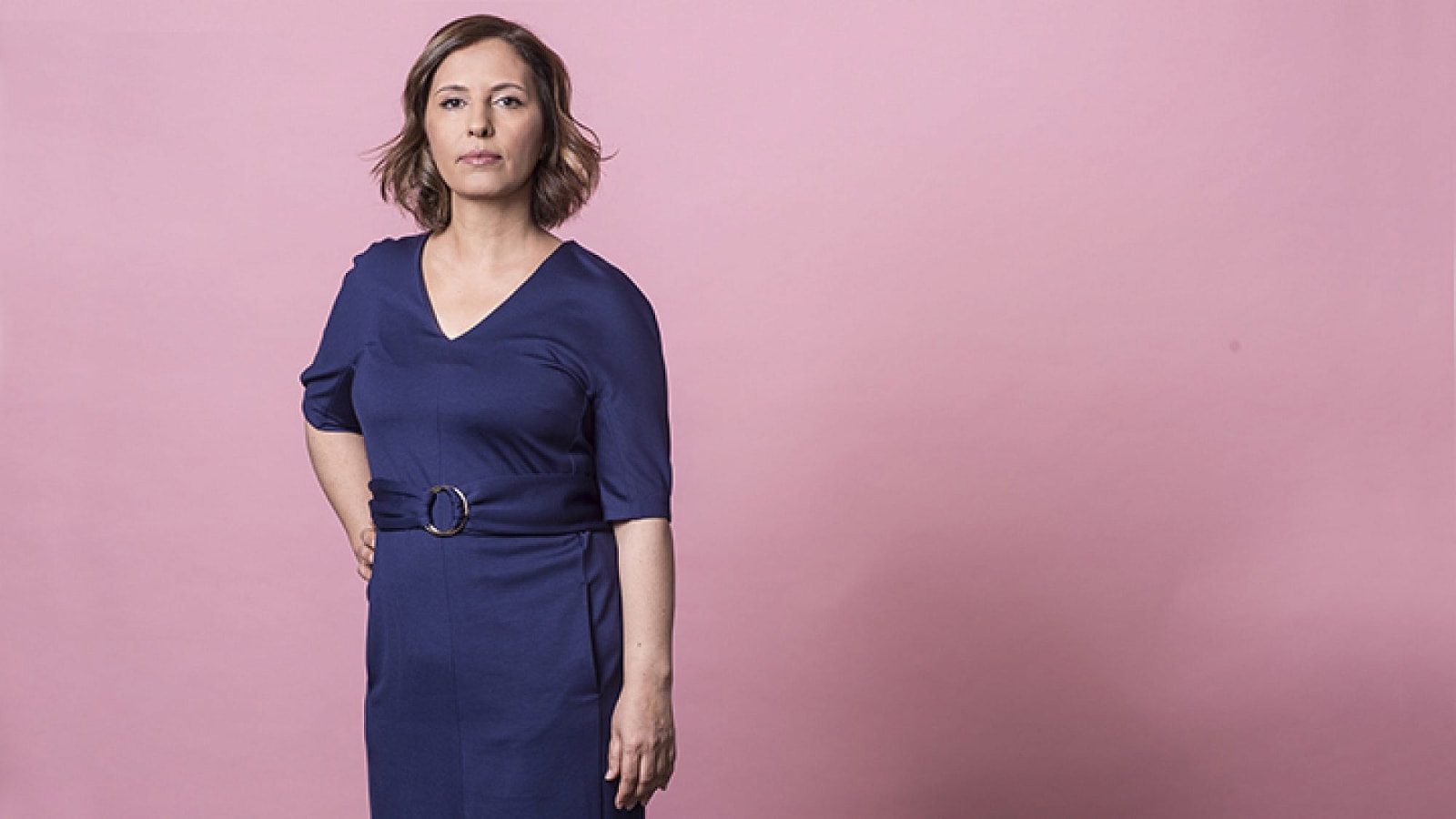
A lot has changed in Gila Gamliel in the 14 years since she was first elected to the Knesset, Israel’s parliament. In her early years she made her name as a brawler and a provocateur. She arrives at her current post, minister for social equality, and at this interview, in a far more conciliatory frame of mind. “My first term was a catastrophe, in my view,” she admits. “It was belligerent, populist. I’m glad I was out of the Knesset for a while and got some perspective. Once I was out I understood that this was not the way. I worked with a personal coach, and when I came back I decided to focus more on getting things done and on the mission.” The mission, as Gamliel sees it, includes her call, together with Eva Medzhibozh, director general of the Authority for the Advancement of the Status of Women, for Alex Gilady to be fired from Keshet, one of the two companies that run Israel’s Channel 2, after his name was linked in recent days to suspected sexual harassment and assault. Today (Wednesday), under public pressure and calls of this kind, Gilady suspended himself until further notice.
“Some people are all about the headline. I’ve been there too. It’s very easy: you have a microphone, you come out with a bombastic statement and you get all the headlines. So today I don’t lead the evening news, but my work matters, and that’s what I get up for in the morning.”
Oren Hazan and David Bitan, for example, two of the Likud’s most combative Knesset members. Are they getting it wrong?
“I’ve learned you can achieve more by gentler means.”
She is plainly careful to keep her language diplomatic, but there are still areas where Gamliel summons the fighting spirit. One issue that burns in her is women’s rights, a subject that has had a thorough airing around the #MeToo campaign.
“It happened to me too, when I was a soldier,” she says. “I fell asleep on the bus on the way home, and when I woke up I felt that the man sitting next to me had slid his hand under my backside. In the first moment it didn’t register. The reaction was to freeze, shock. By the time I pulled myself together and went to the driver, the man had already gotten off. It’s strange, 25 years have passed and I remember his face exactly. When I close my eyes I can see the man in detail.”
What do you make of the #MeToo campaign?
“I think it’s a very important campaign. It’s critical to burn into the public consciousness that women must not stay silent any longer, that sexual harassment has to be reported, that it can happen to any woman and that we have to support one another. I haven’t been harassed since, but I know how much harassment women absorb, in every role and in every place. I do a great deal of work on this. Recently I asked the Education Ministry to put an emphasis on children understanding their right to their own bodies, and I’m working to break the silence of the victims, especially in communities where the silence is deeper, such as the ultra-Orthodox and Arab populations. The message that has to sink in is that the ones who should be ashamed are the attackers, never the victims.”
Pensioners 2.0
The minister’s office in Ramat Gan, just outside Tel Aviv, which also houses the ministry’s Digital Israel project, is done up in full start-up mode: concrete walls, exposed pipes and glass partitions scrawled with digital buzzwords like “distance learning” and “excellence.” A little surreal, considering that before Gamliel renamed it, the ministry was called the Ministry for Pensioner Affairs.
What does the high-tech vibe have to do with senior citizens? Doesn’t it take some of the focus off their needs?
“The opposite. Digital Israel gives seniors a lot of options they never had before: digital literacy, for example, a calculator for claiming their benefits, intergenerational programs. Digitization creates equality, because geographic distance is no longer an excuse for social gaps. I think seniors are very happy with the ministry’s work.”
The relatively new title, “Ministry for Social Equality,” is a little shapeless. What does it actually mean?
“Social equality means equal opportunity for everyone. People aren’t equal, but their rights should be identical, whatever background or gender they come from. This used to be the Ministry for Senior Citizens, and it dealt mostly with leisure and loneliness. As such, it had a small budget, 49 million shekels. On that foundation I built the Ministry for Social Equality, which handles everything to do with seniors alongside young people, women and minorities.”
One of the more significant projects Gamliel has initiated directs 15 billion shekels to development among Israel’s minorities: Druze, Circassians, Muslims, Christians and Bedouin. “We’re a democratic state, and to my mind that has to be made real for everyone. The situation of Israel’s Arabs is dramatic in how much potential goes unrealized. I managed to push through a plan for the Bedouin in the north, and under it we’ll open the first pre-army academy for the Bedouin community.”
She is proud of her record and rather less pleased with how it gets covered: “My work doesn’t get media attention because it’s less tabloid, less juicy, but some unfortunate remark or a conspicuous dress does get headlines. There’s something shallow in the conversation.”
Are you talking about Miri Regev, the culture minister?
“I’d rather not get personal, if you don’t mind. A lot of people talk and talk, and the media hands them the stage every time. The discourse is overheated. It’s overheated in the Knesset, it’s overheated in the media. Everything is a fight. People focus on the noise instead of looking at the work. A journalist once told me that to get headlines I’d have to pick a fight with someone, argue. I don’t want to. I came to get things done. I have no time for that nonsense.”
In these sensitive days Gamliel is careful not to trash a colleague, as she did more than once in the past. As the first woman to chair Israel’s National Union of Students, she knows the value of women backing one another. “There are very few women in national and municipal politics, and it’s very important that women take part. Not enough women try, and many of those who do quit after one term. You have to persevere, and you have to be generous, support women, help as much as you can. There’s a real struggle to keep pace.”
How did you take the news that Zehava Galon, the leader of the left-wing Meretz party, is leaving the Knesset?
“To me it’s a great loss. Whatever our differences, she’s an excellent parliamentarian, and I’m sorry to see her go.”
Parenting for Everyone
Equality, and a leg up for the weak, has been close to Gamliel’s heart since childhood. She grew up in a small shack in the Gedera neighborhood known as the Blind Quarter, the youngest of six. Her parents, Yosef and Aliza, immigrated from Libya and Yemen. She set out to go far: bachelor’s and master’s degrees in law, bachelor’s and master’s degrees in philosophy, and the chair of the National Union of Students, until she decided to run for the Knesset on the list of the Likud, Benjamin Netanyahu’s party.
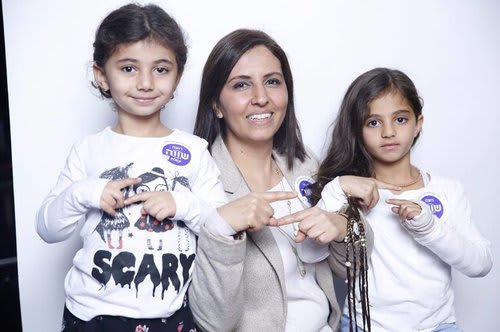
Today Gamliel, 43, lives in the Mishtela neighborhood on the edge of Tel Aviv (“I can’t live downtown, I’m a little claustrophobic”) with her family: her partner, Hovav Dimri, a lawyer in private practice a decade her junior, and their daughters, Tahel, 8, and Yael, 6.
It sounds like you and your husband are both very busy. How do you split things at home?
“Hovav and I are completely equal parents. We split it: two days me, two days him, two days Grandma helps. I think it’s a system that helps everyone grow. We enjoy the girls, and they enjoy getting different approaches to life. We’re different, but I don’t try to change how he raises them and he doesn’t try to change me.”
How does your parenting differ?
“Order and schedules, for one. With Hovav everything is organized, there are fixed hours, the activities are set. With me it’s not like that; the schedule shifts and changes. Hovav is more motivated than I am to do things outdoors, go to the pool, say. I’m stricter about schoolwork. Hovav is less interested in homework; as far as he’s concerned, that’s something you do at school. I’m strict about it, but I don’t come at him with complaints. On my days the girls do their homework with me, and on his days I’ll check in the morning and see what the story is,” she laughs. “Everyone has their strengths. The trick, I think, is not to impose a way of life, not on your partner and not on anyone.”
Merav Michaeli, a Knesset member for the opposition Labor Party, made headlines recently with a controversial statement against the family unit.
“I completely disagree with her. The family should get minimum interference and maximum options. To me the ideal is equal parenting. When both parents are involved, the children are stronger for it. We should aim for an equal framework in which both parents can go out to work and both are equal partners at home. But you certainly can’t dictate to other people the right way to be parents.”
You’ve said the education portfolio is close to your heart. Do you see it as a step toward social equality?
“Unequivocally. I’m on a mission, and I believe the only road to equality runs through education. Everything begins and ends with how we see people who are different. My daughter saw a show on the Children’s Channel, ‘The Boys and the Girls,’ and there was a transgender woman on it. She came to ask me about her, and that’s wonderful. At a young age it’s easier, and right, to encourage an open and honest conversation. That’s what I want to do at the Education Ministry.”
What has to happen for you to get the education portfolio?
“I want it very much and I’ll do everything to get there. That means making sure the portfolio goes to the Likud, and at the same time placing high enough in the party to be given it. So I’m working on both fronts: the coalition negotiations, and the hard work of the primaries.”
How would you deal with religionization, the creep of religious content into secular schools?
“People recoil from religious coercion, but I think children should be given the right to make up their own minds. I went to a secular school myself, and I never got the chance to be exposed to Judaism. I missed out on the beauty of the ‘seventy faces of the Torah,’ the idea that it can be read seventy ways. Today the system is so far from what it should be. Naftali Bennett, the religious-right education minister, comes along and puts up a picture of someone praying; Yossi Sarid, the left-wing minister who once held the job, comes along and puts up the Palestinian poet Mahmoud Darwish. It doesn’t work. We need to see the human mosaic and let children choose their own path inside the system.”
A Dystopian Reality
There is a sense of instability in the system Gamliel works in. One cause of the turbulence, the minister believes, is people’s indifference to that system, and what captures the danger most precisely, in her eyes, is none other than the Emmy-winning television series The Handmaid’s Tale. “I think it’s a very powerful series with an enormous message,” she explains. “The message is that you must not abandon the political arena. If you’re indifferent to the system, you can wake up one day and find yourself in a harsh reality.”
Do you feel you’ve woken up to a dystopian reality?
“I look at the situation today, and people are indifferent. Take the business of the ‘appointees,’ the hand-picked Knesset lists that many people don’t even know about: Moshe Kahlon, Yair Lapid and Avigdor Lieberman all have the power of appointment in their parties. Lapid, in other words, can directly place people in key positions, Knesset members who answer to the party chairman instead of to the public that elected them. That worries me personally, a great deal. If Lapid wins more seats, you could have two or three people running the country. That isn’t such a hypothetical situation, and it should worry everyone. We have to keep our eyes open all the time, so we don’t wake up to a reality like The Handmaid’s Tale.”
At the opening of the Knesset’s winter session, President Reuven Rivlin sounded more pessimistic than ever. “After us, the deluge,” he said. As far as he’s concerned, we’re in the dystopia already.
“The president has every right to say what’s on his mind. One of the cornerstones of democracy is certainly the separation of powers. It’s important to remember that not everything belongs in court and not everything is political.”
Still, the instability is coming from your own party, and from the investigations into Netanyahu.
“Netanyahu isn’t going anywhere. So there’s nothing to talk about.”
And Sara Netanyahu?
“I don’t love getting into spouses, but I do think her role should be given some substance, some meaning. The president’s wife has that, and everywhere in the world the role has substance and meaning, but for some reason not the prime minister’s wife here.”
Is Avi Gabbay’s election as leader of the opposition Labor Party a threat to the government, as you see it?
“No. What’s problematic, and sad, is that there is no opposition in Israel. They elect Avi Gabbay, who can’t serve as opposition leader because he isn’t a member of the Knesset. The whole story is pathetic. If you’re not going to form a broad national unity government, which to me is the ideal, then at least challenge the coalition. Otherwise there’s a serious democratic problem.”
You’re now what you used to protest against: a kind of elite.
“I protested outside the prime minister’s residence when I was young. But I grew up. It strikes me now as less considerate and less effective. There are better ways to change things: vote, join a party and push the right people forward.”
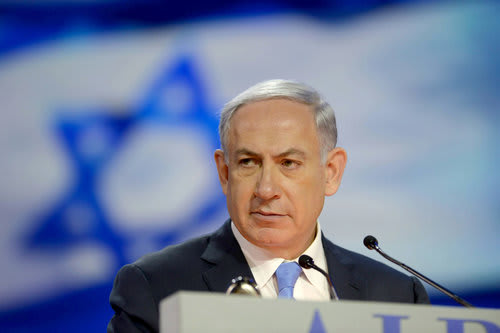

Photography Ilya Melnikov Styling Tami Montag Makeup Maayan Lichtblau Hair Maor Ganon