

The annual Tel Aviv-Los Angeles Workshops, which opened yesterday (Tuesday) at the Tel Aviv Cinematheque, have assembled a fair number of film and television professionals with international names, along with lectures and master classes for local talent.
Among the guests in Israel this week are Sex and the City creator Darren Star, Nina Tassler, president of CBS Entertainment, the director Jerry Levine (Chicago Hope) and others. And then there’s Bill Masters.
Masters, 59, actually started out as a comedian. Over the years he moved into writing, and by the nineties he was a full-time sitcom writer, with credits on Seinfeld, Grace Under Fire, Murphy Brown and more. Next week (Monday) he leads a writing workshop.
“Most shows hire a writing staff of six to 12 writers,” he tells Ynet. “We start work in June, ahead of the fall season, when the head writer, who is usually also the show’s creator, gathers all the writers for a meeting where everyone sits and talks about the show. Everyone throws out ideas, and from there you move on to working on each episode separately. The next stage is handing out the assignments to the writers.”
Sounds like a newspaper editor.
“Exactly. But the creator is also the one who deals with the network and the bureaucracy it imposes. On Seinfeld, for example, the creator (the “showrunner”) is the one who called NBC to tell them, ‘We have a story where all the characters are waiting for a table at a Chinese restaurant.’ The network might come back with, ‘Make sure Kramer has enough to do.’ It’s all one continuous dialogue.
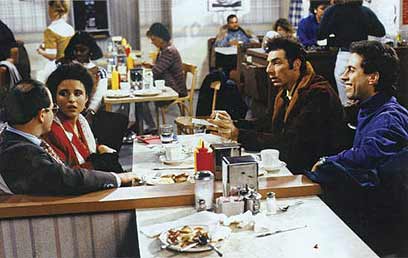
“The goal, when you start in June like I said, is to have as many episodes as possible ready by the end of July. Once production is under way, from August to February, time is very tight. There are 22 to 25 episodes to make, and each one takes a week to produce, plus a few more weeks of post-production.”
Sitcom Factories Inc.
The writing, Masters says, goes on even during the shoot. “During filming the writers’ job splits in two,” he says. “Fixing up the episode that’s being shot that week, and carrying on writing new episodes. It’s like a moving train. You can’t stop it.

“On top of that, the showrunner also works on the episodes that have already been shot. That’s called ‘sweetening’ the episode. Mostly it comes down to getting the edit right, the sound, things like that. By the end of the week the episode is done, and the week after you start on a new one.”
How involved is the network?
“Every show has a network executive assigned to it. The network is a kind of buyer, and the creative process is a collaboration between people. There’s always a little tension, but mostly everyone gets along, because everyone wants the show to succeed.”
What’s the secret of a good show?
“First of all, it has to be funny. The characters have to be interesting, the situations have to be entertaining, and it has to be grounded in reality. On Seinfeld we had a rule: the story had to have happened to you. That sets the bar very high, and the stories couldn’t be completely absurd. In season four we had the bubble boy episode, for instance. It sounds far-fetched, but all of it was based on something that happened to one of the writers. It genuinely started from a true story.”
The Shelf Life of a Laugh
Over the years, as everyone knows, the American sitcom became one of the biggest successes in television entertainment anywhere in the world. Masters can’t put his finger on exactly why. “I think American humor works well. You don’t have many sitcoms in Israel, and that’s pretty strange. In America comedy was always a very Jewish thing, American humor is built squarely on Jewishness, so you have no excuse not to be funny. You’re a whole country full of Jews. Get to it.”
What do you make of the claim that the sitcom is dead?
“I don’t think it’s dead, but it’s definitely in a lull. The peak was about a decade ago, and I think people simply got tired of it. The glut of shows made the whole thing feel stale and killed the demand for sitcoms.
“Besides, there’s a clear trend today toward cutting costs and not worrying about reruns and a long shelf life. Reality, say, American Idol for instance. Those shows are relatively cheap to produce and nobody will ever want to watch them again. But they deliver the goods.”
So why would anyone want to be a sitcom writer these days?
“Because it’s a profession that chooses you, not the other way around. You can’t go into it thinking about business and money. You need a real desire to make people laugh. I believe talented people will survive in this industry no matter what. And untalented ones too.”