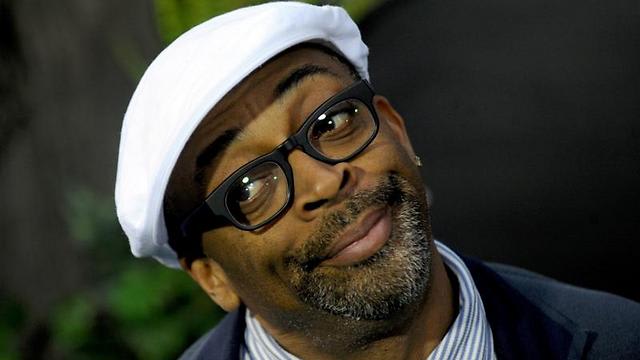
Spike Lee, 56, stopped being the kicking, biting filmmaker who fed the world angry “joints” a long time ago. The African American director identified with political and social message films like Do the Right Thing and Malcolm X has mellowed in recent years. The people who work with him say so too: they report a warm, easygoing mood on his sets, almost like a favorite uncle’s.
Still, Lee can bring the groove he is known for, as in his new action film, Oldboy, a fresh take on Park Chan-wook’s classic 2003 Korean thriller, with Josh Brolin (No Country for Old Men) and Elizabeth Olsen (Martha Marcy May Marlene) in the leads. The plot follows a hard-drinking advertising executive (Brolin) who, one drunken night, is kidnapped and locked for twenty years in a room cut off from the world. When he gets out, he sets off to find out why he was locked up and, no less important, why he was suddenly let go.
“I don’t call it a remake. I call it a reinterpretation,” Lee explains. “The Korean film was an adaptation itself. It’s based on a Japanese manga. So the ‘original’ wasn’t original either. Before I took the project on I got the blessing of Park Chan-wook, the director of the Korean version, who told me, ‘Make your own film.’ I respected the original, but as far as I’m concerned the source is the Japanese manga. I feel like we made a new film here.”
Elizabeth Olsen, the film’s female lead (and the younger sister of the famous twins Mary-Kate and Ashley Olsen), backs him up. “Why do Romeo and Juliet a hundred times?” she says. “It’s a good story. Why not tell it again?”
There are film buffs and fans of the Korean original who surely don’t buy that.
“My film isn’t for them,” Lee says. “Anyone who thinks Oldboy shouldn’t have been made again doesn’t go to the movies anyway. I loved the story and I thought it would be amazing to work with Josh Brolin. I did it because I wanted the challenge. I’d never done anything like it. Then again, I don’t see a big difference between making this film and my other films, even, say, a documentary. It’s telling a story. I don’t switch hats. I stay the same person. That’s what makes it easy for me to jump between projects.”
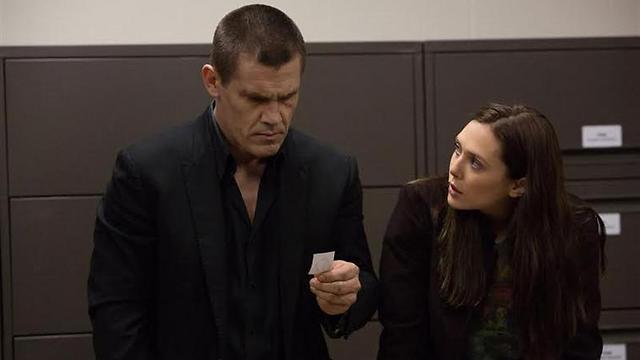
Oldboy was certainly a challenge for Lee. Beyond the fact that the film had, supposedly, already been made, there were logistical problems to solve in a twisting plot that stretches across a long span of time. “How do you shoot twenty years of captivity and still keep it interesting?” the director says of the main difficulty. “What happens when you get out? We talked about it constantly. I had a lot of meetings, a lot of discussions about it.”
How do you think you’d feel?
“I’m sure I’d be in sensory overload. What’s an iPhone? What’s Shazam? I put those questions in because I want the reality to be real, not cardboard, not a cartoon. I also deliberately don’t say where the film is set. We shot in New Orleans, but the film never tells you which city it is. It could be any city.”
For all the gloom, Olsen reports that behind the scenes it was actually nice. “Spike makes a happy set,” she says. “He knows what he wants and he keeps things moving. We’d wrap early and laugh the whole time.”
You have a particularly daring sex scene in there. Did that go just as easily?
“That one especially. I get the feeling Spike doesn’t much like sex scenes. That’s why we did only one take of it, and everything was out in the open because we’d talked about it so much beforehand. He did everything he could to make me comfortable. Before I knew what was happening, it was over.” Lee adds: “If people aren’t relaxed, you don’t get what you want.”
Interesting that just now, when there are quite a few films with Black actors in lead roles (12 Years a Slave, The Butler), your film for once isn’t about the subject.
“Listen, every ten years there’s the same article about the awakening of Black cinema. Everybody runs the headline ‘The African Americans Have Arrived.’ And then… nine years of drought. History has shown it’s either a feast or a desert. How about two years in a row? Would that be possible?”
They say films like 12 Years a Slave have a shot at the Oscar this year.
“Good luck to them. I’m done with the Academy of Motion Picture Arts and Sciences (which hands out the Oscars; N.D.). The Academy had its chance. My film Do the Right Thing lost to Driving Miss Daisy back in the day. Driving Miss Daisy?! Seriously? They teach Do the Right Thing in universities. Does anybody care about Miss Daisy today? The Academy screws up sometimes. I stopped getting worked up about it a long time ago.”
Is there a moral you’d both like audiences to walk out of Oldboy with?
“Not every film has a moral. The audience is supposed to walk out thinking, ‘What the hell was that?’” Olsen says, and Lee joins in: “It’s a revenge film. For me it’s a film about karma, you reap what you sow. But I’ve actually stopped answering questions like that. I respect audiences too much. Let everyone feel whatever they want.”