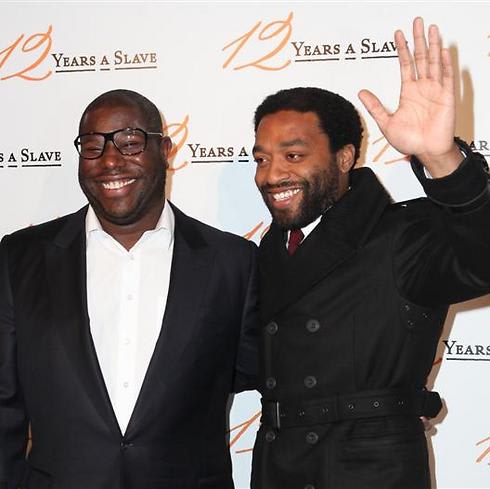
If there is any justice in show business, Chiwetel Ejiofor will end this awards season with a pocketful of statuettes. Ejiofor, an English actor of Nigerian descent, has spent the past few months scorching American screens in 12 Years a Slave, directed by Steve McQueen (Hunger, Shame) and produced by Brad Pitt, who also turns up in a supporting role. The film, which won best drama at the Golden Globes this week, opens in Israeli theaters today (Thursday).
Ejiofor, 36, plays the lead, Solomon Northup, an African American living as a free man with his family in upstate New York in 1853. Northup, who makes his living from carpentry and the violin, is lured onto a work trip to Washington, where he is kidnapped and sold into slavery. So begins a 12-year ordeal (hence the title), in which Northup finds himself doing hard labor on the plantations of Louisiana, trying to survive the terror of his “owners” and, at the same time, to get back home.
“The fact that it’s a true story is what makes the film so powerful,” Ejiofor tells Ynet. “When I read the book, at first I had trouble understanding how a man could fail to escape slavery and get back to his family for 12 years. You need to understand the environment, the circumstances. When it finally sinks in that even though he was a free man on paper he couldn’t go back to his family, it’s just shocking.”
Did you know the story before?
“I admit I didn’t. I only came across it after a conversation with Steve McQueen. For me all of it was fresh and real. The effort to stay historically accurate only made the experience stronger. The production worked with academic advisers and historians to make sure we showed things as they were. We shot in Louisiana, very close to the actual plantations where Solomon worked. I sweat terribly through the whole film, and the sweat is real: we really did spend days in the blazing heat of the cotton fields. I even learned to play the violin like Solomon. You can’t fake it if you don’t know how. I had a teacher, and I practiced with her for hours on end so that my playing would look real.”
Ejiofor, who has been nominated for plenty of awards before, including three Golden Globe nominations (the first for playing a drag queen in Kinky Boots), is expected, as we said, to see his efforts here repaid with a good many prizes.
“It’s a team effort,” he points out. “You could say Steve McQueen got the best out of everyone. Everyone around him wants to give a hundred percent, and it shows. I really went through something, and the conditions only added to it. The enormous heat in the cotton fields makes your head spin, it clouds your thinking. It took me a while to pull myself out of the place I’d gone into, the place of a slave, of a captive.”
Opposite you, Michael Fassbender, Paul Dano, Sarah Paulson and Paul Giamatti play cruel white characters who torment yours and the other slaves. If you went that deep into the role, could you all just carry on as normal after a day’s shooting?
“Honestly, yes. It may sound strange, but after shooting we’d go out together in New Orleans. We drank, we laughed, we let off steam. That was on the very days we were filming the scenes where I’m whipped. We’d wrap, and all of us would go out for a drink. We needed to let go.”

Didn’t the hard material make you angry? Uncomfortable?
“Mostly this history made me sad. The book and the film say a lot about the nature of the relationships between these people. Everyone there suffers, or suffered, white and Black alike. Everyone is trapped in the system and trying to get ahead within it on the terms that exist. Behind every one of them is a human being. These are human stories, and nobody gets a pass. I think that’s what we were trying to do.”
Racial tension is still in the headlines in the United States, including racially motivated crimes and hate between whites and Blacks. How do you think this film will affect that, if at all?
“I think the film will show people how easy it is to become a mental prisoner of society’s bad rules. People in that period went mad, they went down a hole. The film shows, to my mind, that everyone was a slave to some system. What was done there was wrong and inhuman. I hope people will see the film and understand how easy it is to get dragged into terrible crimes like these, and how much you have to stay on guard to make sure it never happens again.”
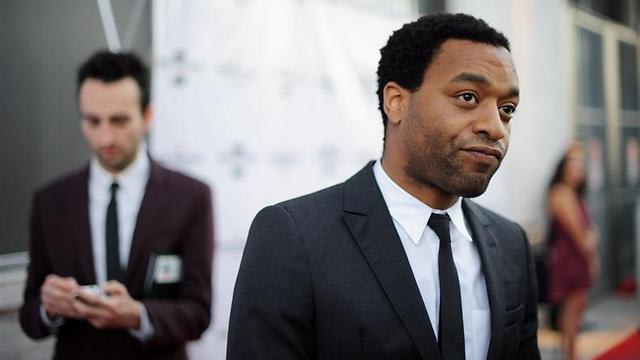
Got the tuxedo ready for the Oscars yet?
“Everywhere I go, people want to talk about the awards and the nominations. I’m glad it worked out this way, but during the shoot the reviews and the award ceremonies never once crossed my mind. When you’re bent over between sugar cane or cotton bushes in heat above 40 degrees Celsius, with people screaming at you and a feeling that they want you dead, the main thing on your mind is how to survive the day. From there, the glittering after-party in Los Angeles looks like another planet.”