They used to tell us crime doesn’t pay. Then again, they also used to tell us Jim Carrey was some kind of lunatic. As of this week both ideas are up for revision: meet Fun with Dick and Jane, a fine piece of social satire dressed up as a holiday movie.
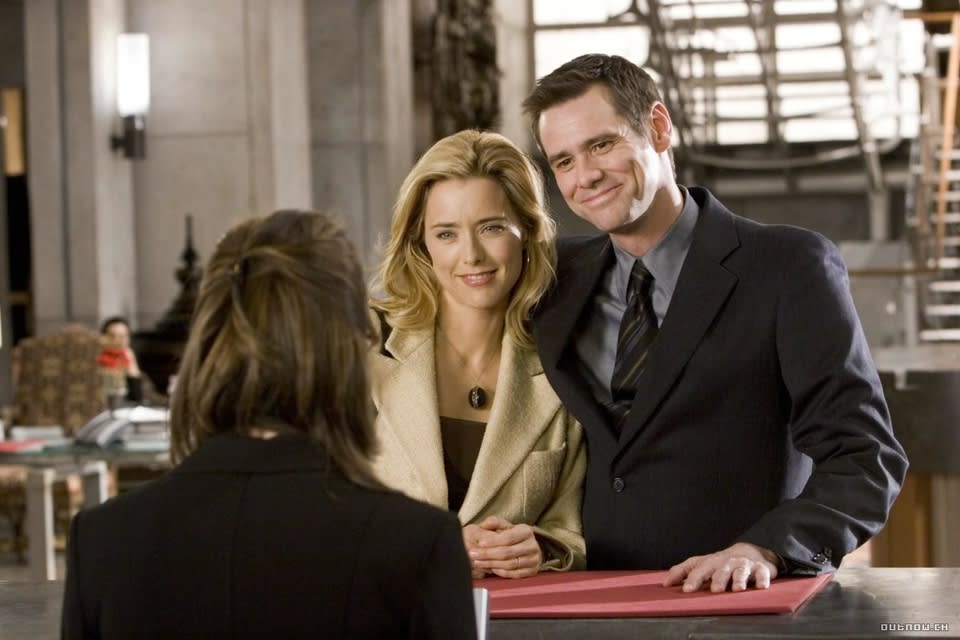
From a distance Dick and Jane looks like one more family comedy, the kind where Jim Carrey mostly pulls faces. The story: Dick (Carrey) and Jane (Téa Leoni) are a suburban couple who suffer a sudden financial crash. Desperate, the two take to robbing stores and set off on a Robin Hood crusade to win back their self-respect. Sounds light. Up close, it turns out to be nothing less than an advertisement for anarchy: the film gleefully shouts the benefits of a life of crime while slipping in poison darts at Botox, migrant workers, George Bush and other musty corners of today’s America.
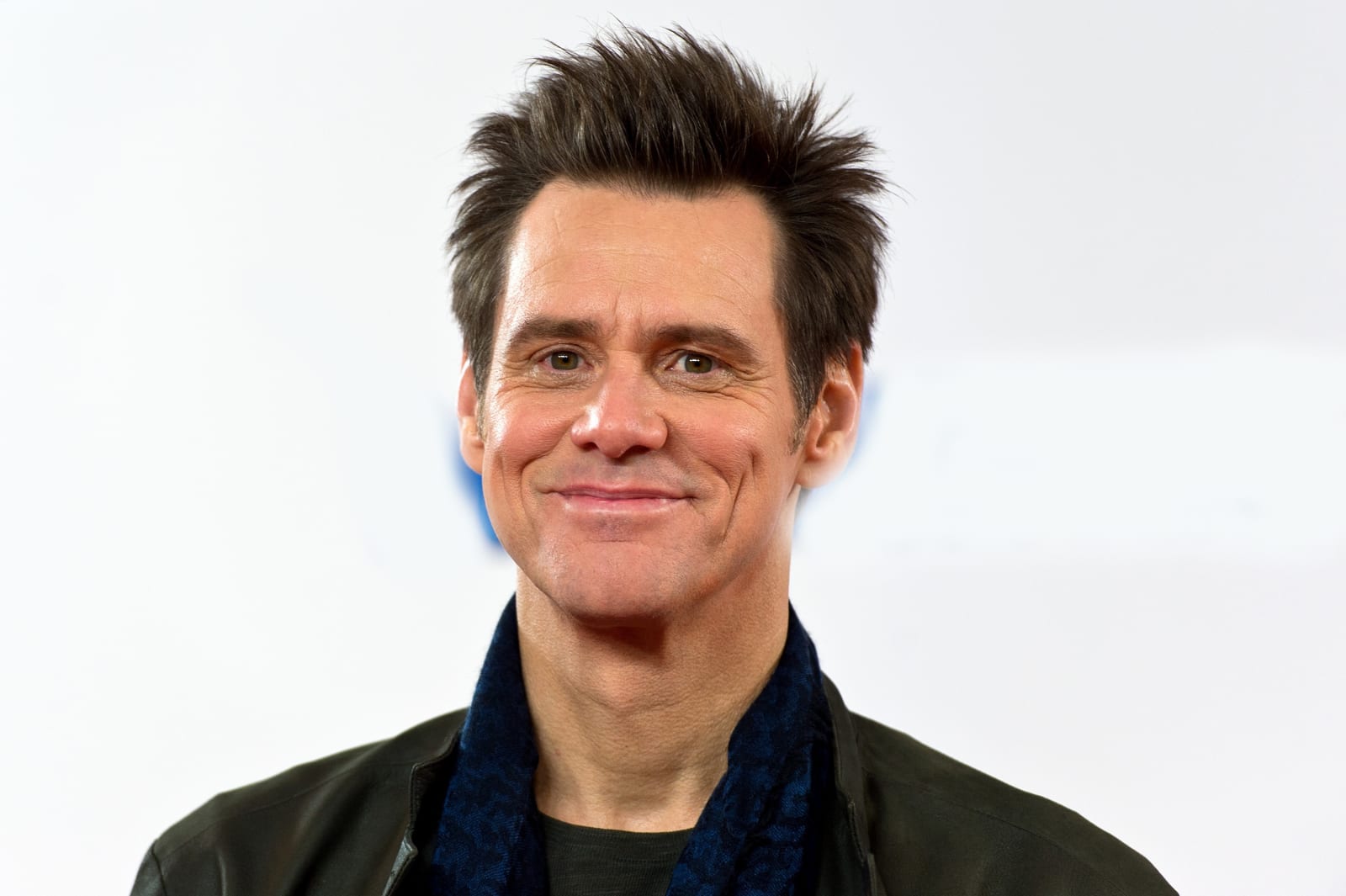
Like the film, Carrey, 43, is a surprise up close. Sitting beside Leoni at New York’s Waldorf Astoria, the comic genius leaves the familiar rubber face in the drawer and goes instead for social messaging. “The film deals with a very serious subject in a funny way,” he opens. “Think about the story: two people slide to the poverty line and get dragged into crime. That could have been a tearjerker in a heartbeat.”
So what were you trying to say?
Carrey: “The situation today is that corporate America is a rotten apple, and we all keep nibbling at it as long as it doesn’t make us sick. There’s a raw nerve in our country: the class gap keeps widening, and the worship of money is making us dumber than ever. A CEO used to earn 40 times what the ordinary worker made. Today it’s 400 times. It’s just vulgar! It takes me back to the Roman Empire.”
Hold on, you count your own salary in millions too.
“Money is great, but it’s a symptom, not the goal. I never worked for the paycheck. I knew that if the day came when I got paid 10 million dollars, it wouldn’t mean I had money. It would mean I had the power to create what I really want.”
Meet the 2005 model Jim Carrey: with power, with vision, and above all well past the Dumb and Dumber era. Don’t expect jokes from him, at least not off screen. Today’s Carrey is a beginner philosopher, a poet of clichés, though his observations are a good deal more entertaining than most: “I’m a clarity freak now,” he answers when asked what keeps him going, “and my energy comes from meditation. I’ve been stoned, I’ve been wasted, I’ve been everything, and now all I want is to be so clear that I turn into a ball of light and fly off the planet.”
Without spoiling the ending, the couple never really pays for all those robberies. Is that what happens when you get clear? You realize crime is great?
“It’s not that the film says, ‘Okay, you’re struggling financially, pick up a gun and go rob a bank.’ I see it more as a statement that in today’s situation, to survive you have to know how to bend the rules.”
Fun with Dick and Jane is based on a 1977 film, originally with Jane Fonda. Why cover it now, of all times?
“True, there’s a remake disease going around, but this isn’t The Godfather, something people automatically know. We thought it was a film that suits the 21st century, with everything that’s going on with Enron (a large American corporation that collapsed much like the company in the film. N.D.) and with our president, on whom Alec Baldwin, my boss in the film, based his character. It was important to me to make a film with a message too, one that shows our economy in a slightly different light.”
Do you remember times when you were poor yourself?
“Of course! I once worked as a janitor and a security guard at a steel plant. I was 16, and my father was out of work at the time. I went to school by day, worked at night, and mostly I was angry all the time. Angry at what the universe had done to me and my father. Ever since, I clean my own toilets. I understand what janitors go through.”
A lot of water has gone over Niagara since the janitor days. Carrey, who burst onto the scene as a gifted comic in films like Ace Ventura and The Mask, started building himself up as a serious actor at the same time. In The Truman Show he moved audiences as a man who falls victim to the reality-TV world; in Man on the Moon he stepped into the shoes of the legendary comedian Andy Kaufman; and in the gorgeous Eternal Sunshine of the Spotless Mind he picked apart the connection between love and memory. Now, as mentioned, he’s going for the middle: on one side he’s delivering a fall-down-laughing comedy, and on the other, poverty isn’t exactly a Grimm fairy tale.
You’ve come a long way since your Ace Ventura days.
“I’m evolving, and I’m proud to show different sides of myself in all kinds of projects. I’m very proud of Eternal Sunshine, because I think we changed something in the language of film with it. In the same way I’m also proud of Dumb and Dumber, which has its own place. I feel I’m changing something in my work, definitely.”
Apart from the message, what did you enjoy most about shooting the film?
“I loved all the creative ways we find to disguise ourselves during a robbery. For instance, there’s a bit in the film where we put on these voice-distorter things so nobody will recognize us. It was just hilarious. Everything you say sounds funny! That whole scene is improvised, and afterwards we sat up until four in the morning laughing with those synthesizers. Another funny bit was when we dressed up as Sonny and Cher. Originally Téa was supposed to be Cher and I was Sonny, but when the costumes arrived we said, ‘Why don’t we actually switch?’ Téa fit Sonny’s clothes perfectly. I, on the other hand, was a very ugly Cher.”
You spend most of the film glued to Téa. Did you work on the couple’s chemistry before shooting?
“The truth is the first time I met Téa was seven hours before we started shooting. For me, coming to a shoot without rehearsals is like showing up for the first day of school without pants. Luckily we had a spark from the first moment. Originally the romance between the characters wasn’t supposed to be emphasized at all. Dick and Jane’s love came straight out of us. Téa goes along with my nonsense. My jokes just bounce off her and back again. She’s a comically flexible girl, very collaborative.”
In the film, part of what drives the characters is who has the nicer car, the more prestigious job and so on. Do you feel the pressure of “whose is bigger” too?
“What can you do, the neighbor’s grass always looks greener. We have a bit in the film where my character steals grass, literally, from the neighbors. The funny thing is that this week I saw a news story about a pair of dentists who stole their neighbors’ lawn. Apparently it’s less far-fetched than we thought.”
A whole interview has gone by without a word about your private life. Inviting the press into your home isn’t your cup of tea?
“I’m very lucky I never became one of those tabloid things. Yes, there are photographers following me, but luckily I’ve never been dragged into that gossip mud. Not that there’s anything wrong with exposure, I love exposing myself (laughs), but my personal life is private. There isn’t much pressure on me to share. There’s so much media today that people are simply desperate for attention and will do anything. With me, in any case, love is not for sale. Besides, I don’t go out at all.”
Why not, actually?
“People say to me, ‘Let’s go to a club,’ and I say, ‘Let’s sit at home and expand our consciousness.’ I sound like a psychopath, right? But my life is like an experiment. I’m always looking for answers: reading about new things, trying new things in food, trying new people, and I’m not afraid to experiment with films either. Today my main form of expression is film. I used to paint, and now I make movies. Drama, comedy, sculpture, painting, it’s all the same thing. For me the meaning of life isn’t making millions, or starring in a sex scandal that keeps the papers fed. For me the summit of ambition is to be a creative human being.”