“I’m sick of being reminded in every interview that I’m from the Bronx. It’ll always be part of me, because that’s where I come from and I spent 20 years of my life there, but still, I feel I’ve grown a lot since then.” (Jennifer Lopez, on her wonder years)
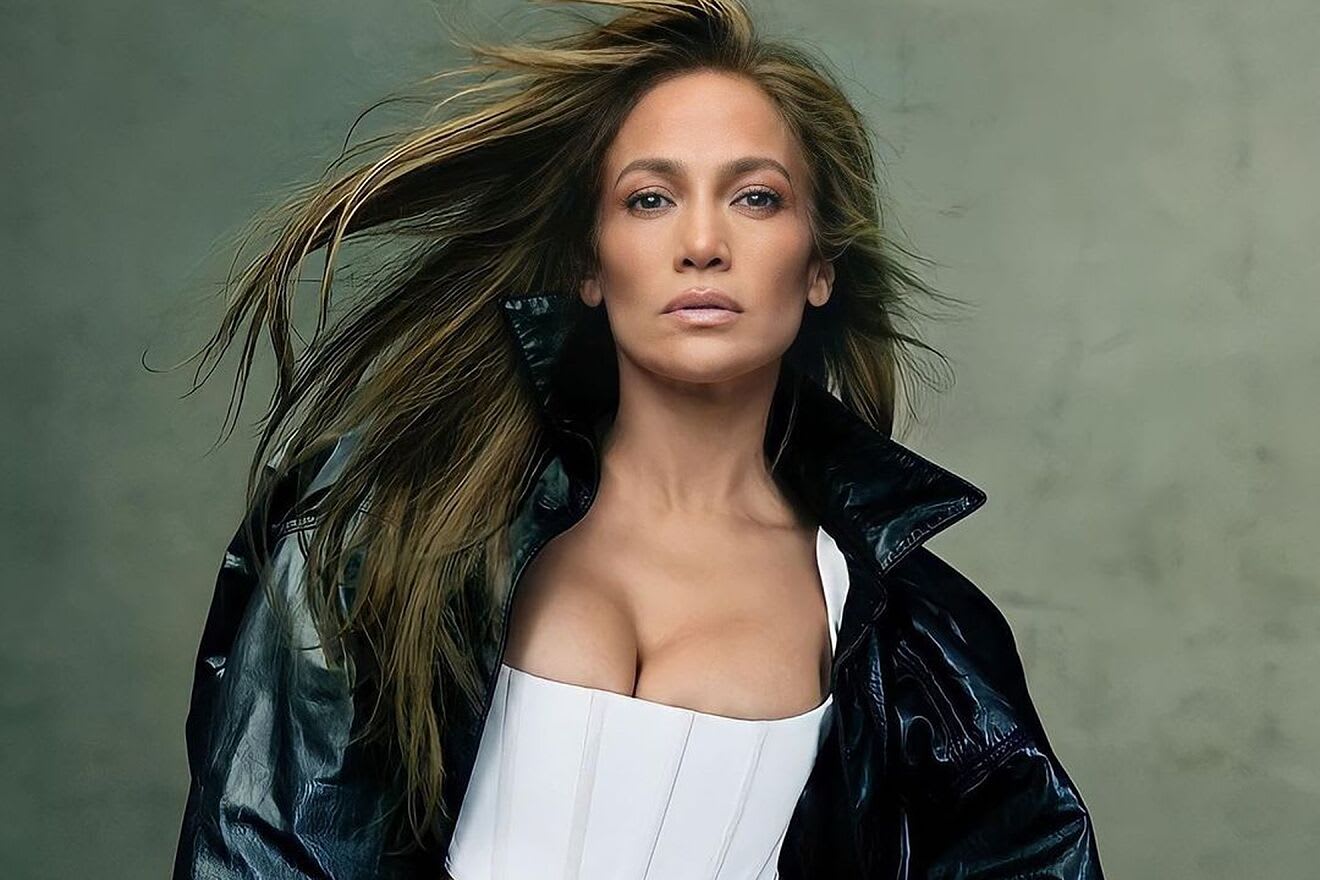
Nobody doubts that J.Lo is about as far from the block as the pop star Sarit Hadad is from the city council back home in Hadera. And yet Lopez keeps up, almost desperately, the pose of the girl next door: the one who may have trouble hauling herself around under all those diamonds, but still keeps it real. Her new film, An Unfinished Life, offers a close encounter with that Lopez, the one who insists she’s still the same simple girl, the one who never let the Hollywood pose go to her head. The one who, given the slightest opening, will hold forth with bottomless seriousness on how hard it is to be famous. “Those paparazzi, you know.”
Sadly, it didn’t take long to figure out that Lopez, for all her good intentions and fine proportions, is not the regular girl she insists on selling. Lopez, as befits a girl who goes through journalists like roasted pistachios, cancelled the interview at the last minute. Only after a massive PR effort did she agree to a press conference, with an impossible sliver of time set aside for questions. Needless to say, La Lopez then showed up an hour and a half late for the press conference. Fashionably late, of course. In the same spirit, at the premiere she marched straight into the theater and flatly refused to play the red-carpet game. The reason: a noisy demonstration against her outside (more on that below). At the after-party she kept up the diva act: she arrived at the New York club Mago wrapped in the clan she calls an entourage and skipped straight into a private room. Not so much as one blown kiss was recorded. And finally, when the summit meeting did take place, Lopez refused to answer a burning question, and honored me with a glare that left me feeling like a battered kitten.
But why get ahead of ourselves. Let’s start with the premiere, at the Directors Guild theater in Manhattan. It was clear from the first minute that things were going to get lively: dozens of activists from ATEP, the well-known animal-rights group, had dug in outside the theater with signs attacking the actress by name. Lopez, it turns out, famous for her fondness for fur, has lately become the activists’ number one target, and they make a point of honoring every event she attends with a noisy protest. This time they brought dolls of slaughtered animals and signs with the topical slogan “J.Lo, you’re responsible for unfinished lives.” Across from them stood the packs of paparazzi, trying to guess how Lopez would handle the commotion this time. The answer came fast: when the lady arrived, husband Marc Anthony in tow, it took her exactly one second to announce that she does not pose in front of corpses. “I’m not doing a red carpet here,” she fumed, and ducked quickly inside, showing a round little tush to the demonstrators and photographers waiting for her outside. The result: the paparazzi and the demonstrators took it out on each other, one side yelling “your stupid protest just cost us money,” the other screaming “you’re helping photograph the devil.” Oh well.
After an opening that hot, there was something almost ironic about walking inside and watching Lopez play a battered woman (and play her well, to her credit), unlike the embarrassing turn she took in Enough, another battered-woman drama, which did her no favors. In An Unfinished Life, the new film from the respected Swedish director Lasse Hallström (Chocolat, The Cider House Rules), Lopez plays Jean, a hard-luck woman with a past full of secrets. After one slap too many from her abusive boyfriend (Damian Lewis), she packs up her young daughter (Becca Gardner) and goes to park herself at the home of her late husband’s father (Robert Redford, in cowboy mode). Mother and daughter find the old man nursing his injured friend (Morgan Freeman), and the four of them set up house together on the isolated ranch. As time ambles along, everyone learns to face their fears, and in the end they come together as a family. Lopez stands out as a woman walking the line between strength and vulnerability, and she is genuinely moving as a mother who wants the best for her daughter and still manages to get it wrong, time after time.
Back to reality, where Lopez is less a tired mother and more the New York edition of Imelda Marcos. She arrives at the press conference, at the Essex House hotel on Central Park, equipped with two enormous black bodyguards and an assistant whose main job was opening her water bottles. Mummified in a white suit and a helmet of hair borrowed from the Israeli politician Ora Namir, Lopez announces that the day is short and the work is plentiful, so come on, let’s talk. “I wanted something more dramatic, more character-driven,” she begins, explaining what drew her to the script. “Obviously the comedies I do get more attention, but this film was something I needed to grow as an actress. There aren’t many films like this in Hollywood, with this much emotion. At the end of the screening I had tears in my eyes, really.”
What was it like working with heavyweights like Robert Redford and Morgan Freeman?
“When I started shooting the film I was at a good place in my career, so I could handle these people. I was confident, so having Robert and Morgan around didn’t rattle me. The one who lost her mind was my mother. She grew up on Robert Redford; there was a time she lived for him and nothing else. I’ve been hearing his name since I was six. For her it’s a kind of dream. When she came to visit the set she didn’t come to see me, she came to see Robert. You could say my career only started meaning something to her now.”
We’re seeing you in more and more serious roles. Is that deliberate?
“Absolutely. I’m not the person I was five years ago. I’m very happy to be going through a process of growing up, because I feel it makes me better. Sure, it’s fun to be 20, when everything is rosy and sweet and wonderful, but it’s also an age when real emotional depth is hard to come by. Depth comes with experience, and I feel like age only helps me get better as an actress.”
In the film you play a battered woman. Have you ever been abused yourself?
“Nobody has ever abused me, apart from the media,” she half-laughs, “but I can relate to the effort of finding inner strength. Every character in the film has to face their own bear, which stands for some kind of fear. I can completely understand that.”
Speaking of fear, what do you make of what’s going on in New Orleans right now?
“My husband and I donated a lot of money to the Katrina victims. My thing right now is to focus on what they actually need there. Right now, say, our focus is on funding medical care for children. We’ll keep giving and helping, and we’ll raise more support through my husband’s concerts.”
So what’s actually going on with you these days?
“Right now I’m coming down from a very stressful period. I’m on the road, traveling with my husband on his tour. It’s good for me right now, being in the background instead of out front. I made a decision that work would stop being the center of my life. So I still take calls, but let’s say nobody gets to call me at two in the morning anymore.” “Last question,” chirps the publicist. The clock was ticking, and not one of the world’s assembled journalists had touched on last night’s events, or on the question of why Jennifer insists on going head to head with the animal-rights groups. In a world where even the Uptown snobs are happy to wrap themselves in synthetics, what exactly drives Lopez to stick fur on half the items in her wardrobe? With a trembling heart I stepped up to the microphone and tried my luck with Her Grace.
“Yesterday there was a wild demonstration outside the theater. What do you have to say about that?”
“No comment,” said the lady, icily, suddenly bristling like a German prison matron.
“Don’t you at least want to explain what’s going on out there?”
“I’m not interested in talking about that at all,” she said, signaling her herd of handlers to get her out of there, now.
Now, with fury in her eyes and smoke coming out of her ears, Lopez suddenly looks a little different: in the space of a second the smiling actress becomes a kind of Don Corleone, which is to say a tough businesswoman, armed with bodyguards and a fighting stance. Why would she talk about fur? She’s a businesswoman, after all, and blood is very bad for business. And maybe that schizophrenia is the secret of her charm: as long as she stays the nation’s sweetheart out front, there’s apparently no problem with her running things backstage like a tough little mafiosa.